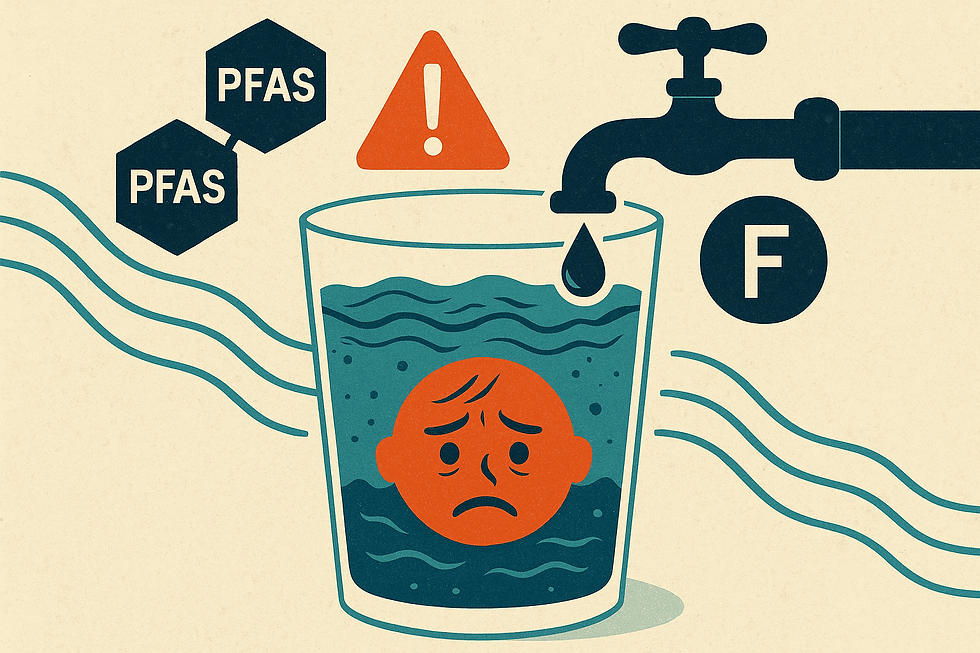
What’s Really in Your Water? The Scary Truth About Groundwater & Stormwater Contamination

You probably assume the water coming out of your faucet is clean. It looks fine, tastes fine, so it must be fine… right? Not always. Underneath our feet, groundwater and stormwater are often carrying a chemical cocktail that sounds like a chemistry class gone wrong. These pollutants don’t just show up overnight; they come from everyday sources like farms, roads, and industrial waste. And once they’re in the water system, they can stick around for a long time.
Here’s a closer look at the worst offenders, what they do to your health and the environment, and how water filtration systems can keep your water clean and safe.
1. PFAS: The “Forever Chemicals” That Refuse to Leave
PFAS (Per- and Polyfluoroalkyl Substances) are used in everything from nonstick pans and waterproof jackets to firefighting foam. They’re nicknamed “forever chemicals” because they basically never break down. Once they enter groundwater, they stay there, well, forever.
Why it’s a big deal:
Connected to thyroid problems, immune issues, & certain cancers
Build up in your body & the environment over time
Spread easily through water systems & rainfall
How to stop it: Removing PFAS takes more than a basic filter; you’ll need advanced treatment like activated carbon, ion exchange, or reverse osmosis systems.
2. Nitrates: The Farm-to-Faucet Contaminant
Farming is essential, but the fertilizers and animal waste that come with it are a major source of nitrates in groundwater. After heavy rain, runoff carries these compounds straight into wells and aquifers.
Why it’s dangerous:
Causes “blue baby syndrome” (low oxygen levels in infants)
Linked to digestive cancers & reproductive problems
Feeds toxic algae blooms that harm fish & ecosystems
How to remove it: Reverse osmosis and ion exchange filters are highly effective at cutting down nitrate levels in drinking water.
3. Heavy Metals: The Silent, Toxic Invaders
Lead, arsenic, and mercury might sound like elements from a science experiment, but they’re surprisingly common in groundwater. These heavy metals can leach from old plumbing, mining operations, or industrial runoff.
Why they’re bad news:
Lead: Affects brain development & behavior in kids
Arsenic: Linked to skin, lung, and bladder cancer
Mercury: Damages the nervous system & kidneys
The fix: Multi-stage filtration systems, especially those with activated carbon and reverse osmosis, can capture these toxic metals before they reach your tap.
4. Pesticides & Herbicides: The Chemicals That Stick Around
The same chemicals that protect crops from bugs and weeds can hang around long after harvest. Pesticides and herbicides often wash into groundwater and storm drains, lingering in the environment for years.
Why they’re harmful:
Mess with hormones & reproductive health
Linked to liver & kidney damage
Threaten bees, fish, & other wildlife
How to filter them out: Granular activated carbon filters are among the best options for removing pesticides and herbicides from water.
5. Oils & Hydrocarbons: Urban Pollution You Can’t See
When it rains, stormwater picks up everything on city streets, oil, fuel, and other hydrocarbons, and washes it into local waterways. You might not notice it, but this kind of runoff is one of the most common sources of urban water pollution.
Why it matters:
Contains carcinogens like benzene & toluene
Smothers aquatic life & kills fish
Slowly contaminates groundwater
How to prevent it: Stormwater systems equipped with oil-water separators or hydrophobic filters can trap hydrocarbons before they enter the water supply.
Why Water Filtration Systems Matter (Even If Your Tap Water “Looks Fine”)
The truth is, you can’t always see contamination. A glass of water can look crystal clear and still contain harmful chemicals. That’s why water filtration systems, both for homes and large-scale municipal systems, are so important.
They help:
Protect your family’s health
Keep ecosystems thriving
Ensure compliance with water quality regulations
Give you confidence that your water is actually safe
Groundwater and stormwater pollution isn’t just an environmental problem; it’s a public health issue. But the good news? We can fix it. With the right filtration technology, we can catch these contaminants before they ever reach your tap. Because clean, safe water isn’t a luxury, it’s a basic right. And it starts with knowing what’s in it.