Manganese in Water: What It Means for Source Water & How to Treat It

Manganese is one of those water-quality issues that can seem pretty straightforward at first. It's naturally occurring, it shows up frequently in groundwater, and there are established ways to remove it.
But anyone who works in water treatment knows that the reality is a little more complicated.
Manganese doesn't always behave the same way from one water source to another. Its chemistry can change based on conditions in the source water, which means the treatment approach that works for one system may not be the right fit for another.
So, let's take a closer look at what manganese is, where it comes from, how it affects water quality, and the treatment options available for manganese removal.
First Things First: What Is Manganese?
Manganese is a naturally occurring element found in rocks, minerals, soil, and sediment. It can make its way into groundwater as water moves through geological formations that contain manganese.
And here's where things get interesting from a treatment perspective: manganese doesn't always exist in the same form.
In oxygen-depleted groundwater, manganese can remain dissolved in the water. Once that water reaches the surface and comes into contact with oxygen, or an added oxidizing agent, the manganese can change chemically and form particles that are easier to remove through filtration.
That distinction matters.
If manganese is dissolved, simply running the water through a standard particulate filter may not get you the removal you're looking for. The treatment process may first need to change the manganese into a form that the filtration media can capture.
What Does Manganese Do to Water?
At elevated concentrations, manganese can become pretty noticeable.
The most obvious issue is often aesthetic. Manganese can cause dark brown or black staining on sinks, tubs, fixtures, and other surfaces. It can also contribute to discoloration and an unpleasant metallic or bitter taste.
The EPA lists a secondary maximum contaminant level of 0.05 mg/L for manganese. Secondary standards are focused primarily on aesthetic qualities of drinking water, such as appearance, taste, and odor.
For water utilities and industrial facilities, though, the concern isn't necessarily limited to what happens at the tap. Manganese can also contribute to deposits within piping, treatment equipment, and distribution systems.
Basically, if you've ever dealt with a system where the water looks perfectly fine one day and suddenly starts leaving dark stains everywhere, manganese is one of the things worth investigating.
How Does Manganese Get Into Source Water?
Manganese is typically associated with natural geological processes.
As water travels through the ground, it interacts with rocks and minerals. Depending on the chemistry of the environment, manganese can dissolve into the groundwater and become part of the source-water supply.
Groundwater isn't the only place manganese can occur. It can also be present in surface water, where changes in oxygen levels, sediment conditions, biological activity, and other environmental factors can affect its concentration and chemical form.
This is one reason water testing is so important.
Two wells might have similar manganese concentrations on paper but behave completely differently during treatment because their pH, iron levels, alkalinity, dissolved oxygen, or other water characteristics aren't the same.
The number on the lab report is important, but it's definitely not the whole story.
Why Iron & Manganese Often Get Mentioned Together
If you're dealing with manganese in groundwater, iron is another contaminant you’ll want to keep on your radar.
Iron and manganese commonly occur together, and both can create staining and other water-quality issues. However, they don't necessarily respond to treatment in exactly the same way.
Iron is generally easier to oxidize, while manganese can require more specific conditions to achieve effective removal.
That means treatment design may need to account for things like pH, oxidation conditions, chemical dosing, contact time, and filter media.
In other words, a treatment system that handles iron well isn't automatically going to deliver the same results with manganese.
How Do You Remove Manganese From Water?
There are several ways to approach manganese water treatment, and the right option depends on the source-water chemistry and the goals of the project.
Oxidation + Filtration
One of the most common approaches is to oxidize the manganese and then filter it out.
The basic idea is pretty simple: change dissolved manganese into a form that can be physically captured by filter media.
Depending on the application, chlorine, potassium permanganate, ozone, or other oxidation methods may be used. The challenge is getting the conditions right. Manganese oxidation can be sensitive to pH and other water-quality characteristics, so chemical addition needs to be designed around the actual source water.
Specialized Filter Media
Another option is using filtration media specifically suited for iron and manganese treatment.
Certain media can help promote oxidation while providing a surface where manganese particles can be retained. Manganese greensand and other catalytic or manganese-oxide-based media are examples used in water treatment.
The important thing here is not assuming that every media product will perform the same way. Media selection should be based on the application, water chemistry, contaminant levels, and operating conditions.
Aeration
Aeration adds oxygen to the water and can help with the oxidation of dissolved contaminants.
It can be useful as one step within a larger treatment process, particularly when iron and manganese are both present. Because manganese can be more difficult to oxidize than iron under certain conditions, aeration is often paired with filtration rather than treated as the entire solution.
Biological Treatment
Biological treatment takes a different approach by using microorganisms to help remove manganese.
This technology has been researched and applied in certain drinking-water treatment scenarios. It can be an interesting option for facilities looking to reduce chemical use, although biological systems require specific conditions and aren't necessarily appropriate for every application.
Membranes & Other Technologies
Depending on the project, manganese can also be addressed using technologies such as ion exchange, reverse osmosis, coagulation, and chemical precipitation.
These options may be particularly relevant when manganese is only one part of a larger water-quality challenge.
What Should You Know Before Selecting a Manganese Treatment System?
This is probably the biggest takeaway: don't design a manganese treatment system from the manganese number alone.
Before selecting equipment, look at the bigger picture.
Important source-water parameters can include:
Manganese concentration
Iron concentration
pH
Alkalinity
Dissolved oxygen
Turbidity
Oxidation-reduction conditions
Flow rate
Other contaminants
These details can help determine how the manganese is behaving and which treatment strategy makes the most sense.
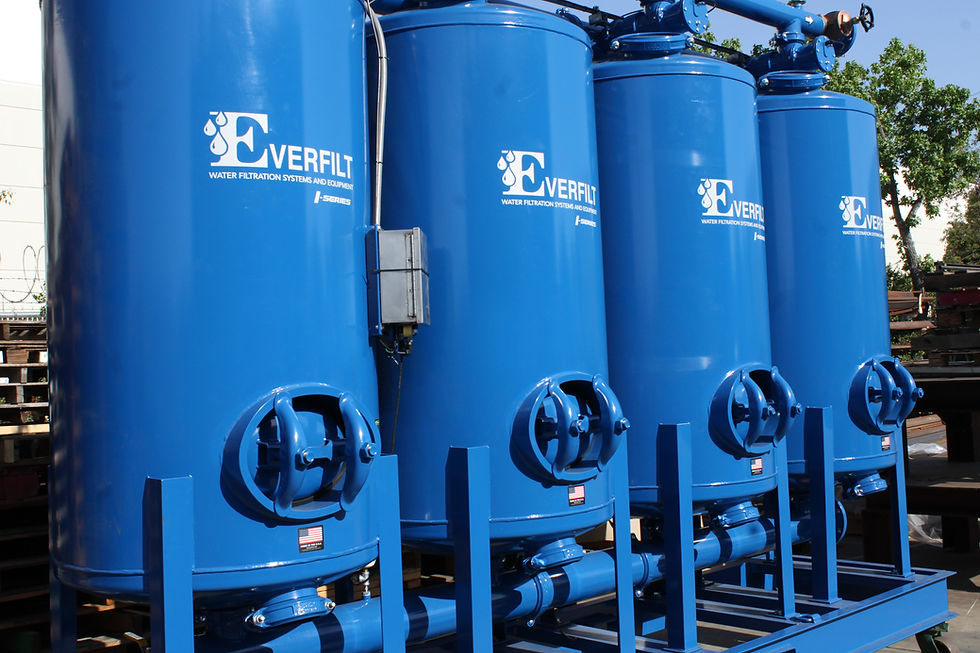
And if you're evaluating filtration equipment, don't stop at the media. Vessel design, backwashing, underdrains, access for maintenance, flow requirements, and media-change considerations can all have a real impact on how a system performs over time.
Finding the Right Approach for Manganese Removal
There's no universal manganese-treatment recipe, and honestly, that's part of what makes water treatment interesting. The right solution depends on the source, the chemistry, the required flow, and what else is happening in the water.
For many groundwater applications, oxidation combined with specialized media filtration can be an effective strategy. Other projects may benefit from aeration, biological treatment, membranes, or a combination of technologies.
The goal is to build a treatment process around the water you're actually working with, rather than trying to force the water into a predetermined treatment method.
Manganese is a naturally occurring element, but elevated levels can create very real water-quality and operational headaches.
The good news is that there are multiple proven approaches for manganese removal from water. The key is understanding the source-water chemistry and how manganese exists within that water before choosing a treatment technology.
For water treatment professionals, that's really the heart of it: test the water, understand the chemistry, choose the right process, and design the equipment around the application.
Because when it comes to manganese, a treatment system isn't just about removing a number from a lab report. It's about building something that can keep doing its job when it's out in the real world.