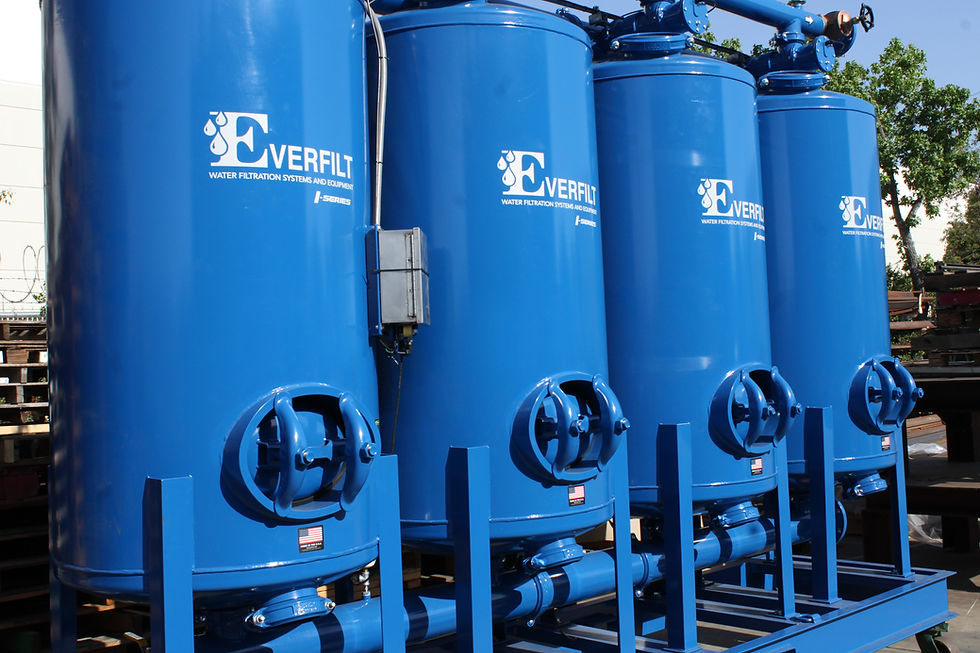
10 Powerful Insights on Iron Removal & Activated Carbon Filtration

Clean water isn’t just a convenience; it’s a critical operational asset across agriculture, industry, and even commercial properties' systems. Two technologies consistently stand out in modern water treatment: iron removal filtration and activated carbon filtration.
This guide goes beyond the basics, breaking down how these systems work, why they matter, and how combining them can dramatically improve water quality.
1. Why Iron in Water Is a Bigger Problem Than You Think
Iron contamination is common in groundwater and industrial supply systems.
While small amounts aren’t harmful to drink, excess iron can:
Stain equipment & infrastructure
Clog pipes & irrigation systems
Disrupt chemical processes
Over time, untreated iron can significantly increase maintenance costs and reduce system efficiency.
2. How Iron Removal Filtration Actually Works
Iron doesn’t always start as a visible particle. In many cases, it’s dissolved (ferrous iron) and invisible.
Filtration systems typically:
Oxidize dissolved iron into solid particles
Use media filtration to capture those particles
Remove them before they enter downstream systems
This transformation step is what makes iron removable in the first place.
3. Activated Carbon: The Warrior of Water Filtration
Activated carbon is one of the most widely used filtration media, and for good reason.
Its highly porous structure allows it to:
Adsorb organic compounds
Remove chlorine & chemical residues
Improve taste & odor
This process, called adsorption, traps contaminants on the carbon’s surface rather than filtering them out mechanically.
4. Why Combining Both Systems Creates Superior Results
Individually, each system solves a different problem.
Together, they form a multi-stage filtration strategy:
Iron removal handles metals & particulates
Activated carbon removes chemicals & organics
This layered approach produces cleaner, more stable water for diverse applications.
5. A Hidden Benefit: Reducing Biofouling
Biofouling, caused by bacteria and algae buildup, can cripple water systems.
Activated carbon helps reduce this risk by:
Removing organic nutrients microbes feed on
Stabilizing water chemistry
The result is a longer system lifespan and fewer operational disruptions.
6. Not Just for Industry: Commercial Property Applications Are Growing
While traditionally used in agriculture and industrial systems, these technologies are increasingly found in:
Private wells
Commercial property filtration systems
Drinking water solutions
They provide a reliable way to tackle common issues like staining, odor, and chemical contamination.
7. Adaptable Across Multiple Water Sources
One major advantage is flexibility.
These systems can be tailored for:
Groundwater wells
Surface water (lakes, rivers)
Rainwater collection systems
Each source presents different challenges, but both filtration methods can be customized to match.
8. Cost Savings Over Time
Investing in proper filtration isn’t just about water quality; it’s about economics.
Benefits include:
Reduced equipment wear & tear
Lower maintenance costs
Less downtime in operations
Over time, filtration systems often pay for themselves through efficiency gains.
9. Better Water = Better Agricultural Output
In agriculture, water chemistry directly impacts crop health.
Excess iron and organic contaminants can:
Interfere with nutrient absorption
Disrupt irrigation systems
Proper filtration helps maintain balanced nutrient delivery, leading to improved yields and healthier crops.
10. Unexpected Use Cases: Water Parks & Aquariums
Beyond farms and factories, dual filtration systems are essential in:
Water parks (prevent staining & ensure clarity)
Aquariums (protect aquatic life)
These environments rely on visually clean and chemically stable water, making advanced filtration indispensable.
Key Takeaways
Iron removal filtration targets dissolved & particulate metals
Activated carbon filtration removes chemicals, odors, & organics
Combining both creates a high-performance, multi-stage system
Applications range from industrial operations to residential use
Long-term benefits include cost savings, efficiency, & better water quality
Modern water challenges require layered filtration strategies, not one-size-fits-all solutions. By integrating iron removal with activated carbon, you can achieve cleaner, safer, and more reliable water systems.