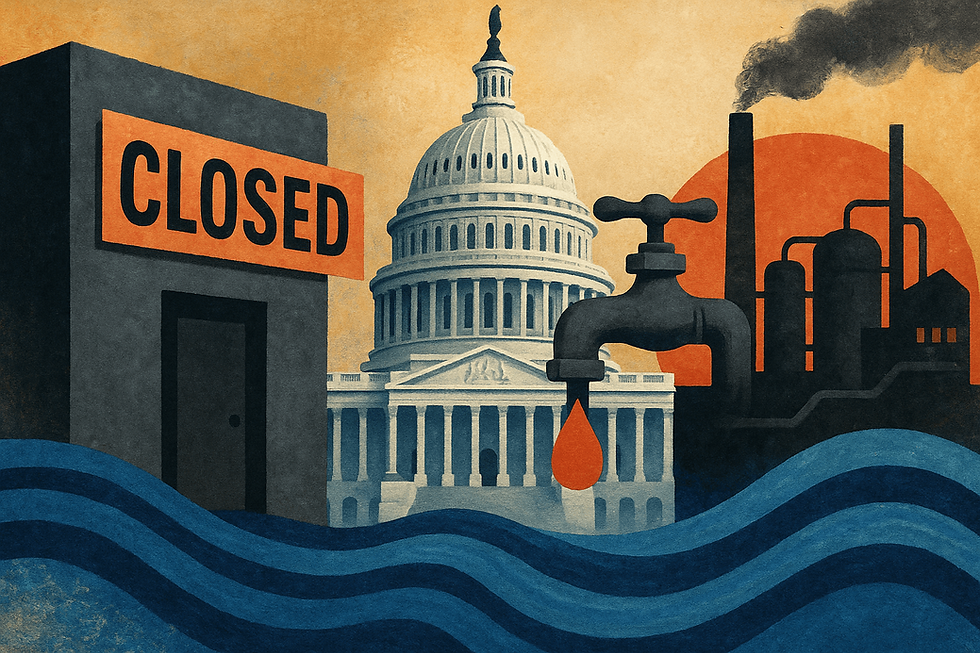
The 2025 Government Shutdown Is Drying Up the Irrigation Industry & Putting Water Treatment on Pause

When Politics Gets in the Way of Progress
And so the government shutdown continues, and this time, it’s hitting the irrigation and water sectors hard. If you work in Ag, construction, or utilities, you’ve probably already felt it. Projects are stalling, payments are stuck in limbo, and everyone’s waiting on emails from agencies that are… well, out of office indefinitely.
And while this might sound like “just another D.C. headache,” for the irrigation industry and water treatment professionals, the ripple effects are very real and could stretch way beyond the shutdown itself.
Why Irrigation Businesses Are Feeling the Pinch First
The irrigation world runs on more than just water; it runs on USDA programs, NRCS technical support, and federal contracts. When those systems shut down, everything from conservation planning to equipment installation can grind to a stop.
Here’s the current reality:
NRCS & USDA programs are mostly offline. Most staff are furloughed, so new enrollments, technical support, and cost-share programs are paused.
Payments are delayed. If you’re waiting on a USDA reimbursement or Rural Development loan, expect to wait longer.
Contracts are frozen. Projects tied to federal funds, like canal repairs or irrigation modernization, can’t move forward until appropriations are restored.
In short, the irrigation industry is basically running on “airplane mode” until the federal switch flips back on.
Real Talk: What That Means for Day-to-Day Operations
Even a short shutdown can feel like a bad domino effect for contractors, growers, and suppliers.
Projects are delayed. Without federal sign-offs, work that was ready to start is now on hold.
Cash flow’s getting squeezed. Smaller contractors, depending on reimbursements, are juggling payroll and expenses.
Supply chains are shifting. If federal projects pause, subcontractors and suppliers start scrambling to fill gaps.
Permits are in limbo. Anything needing EPA or Army Corps approval is sitting in someone’s inbox, indefinitely.
Every delay costs time, money, and momentum, three things the irrigation sector doesn’t exactly have to spare.
The Water Treatment Side Isn’t Immune Either
Yes, water and wastewater systems are essential services, so taps will keep running. But “essential” doesn’t mean “unaffected.”
Here’s what’s happening behind the scenes:
EPA oversight is scaled way back. Routine inspections, permit renewals, and non-emergency research? All on pause.
Funding pipelines are frozen. Grants for infrastructure and treatment upgrades are in holding mode.
Research is stalling. Labs that track contaminants or test new treatment tech are basically ghost towns right now.
So, while the public won’t notice much today, these delays will slow future upgrades, data collection, and long-term improvements to water systems that communities depend on.
Short-Term Headaches, Long-Term Consequences
In the short run, the industry is dealing with scheduling chaos, funding delays, and a lot of unanswered emails. But the long game? That’s where it really hurts.
Massive backlogs once the government reopens.
Rising project costs from supply and labor changes.
Deferred maintenance that sets back water conservation and infrastructure resilience.
A few weeks of political gridlock can snowball into months of lost progress. And unfortunately, we’ve seen this movie before.
What You Can Actually Do About It
You can’t end a shutdown yourself, but you can prepare and adapt.
Here’s how irrigation pros and water utilities can stay ahead of the mess:
Map out your federal exposure. Know which projects depend on USDA or EPA approval/funding.
Communicate early and often. Let clients and partners know what delays could mean for them.
Document everything. Keep records of costs, delays, and communications for later reimbursement or claims.
Check state or local options. Some conservation districts have emergency funding or technical support available.
Revisit contracts. Add “shutdown clauses” to future agreements so you’re protected next time Congress can’t agree.
It’s not ideal, but preparation now saves a ton of stress (and money) later.
The Bigger Picture: A System That Needs a Tune-Up
This shutdown is more than a temporary pause; it’s a reminder of how dependent our water infrastructure is on a functioning federal system. When that support stops, so does progress on the projects that keep farms running, water clean, and communities resilient.
Moving forward, the industry may need to rethink how it’s funded; more state-level programs, private partnerships, and resilient funding models could help prevent this kind of chaos from repeating every few years. Because let’s be real: water doesn’t wait for Congress to get its act together.
Sources
U.S. Department of Agriculture (USDA). “FY 2025 Lapse in Appropriations Contingency Plan.” https://www.usda.gov/shutdownplans
Natural Resources Conservation Service (NRCS). “Agency Contingency Plan for Operations During a Lapse in Appropriations.” https://www.nrcs.usda.gov
U.S. Environmental Protection Agency (EPA). “EPA Contingency Plan for Shutdown of the Agency During Lapse of Appropriations.” https://www.epa.gov/lapse/agency-contingency-plans-event-lapse-appropriations
Irrigation Association. “Federal Shutdown Impact on Irrigation Programs.” https://www.irrigation.org/ia/Advocacy/Insights/2024/Advocacy_Impacts_Monitoring_the_potential_federal_government_shutdown.aspx
Associated General Contractors of America. “Construction Impacts from Federal Government Shutdowns.” https://www.agc.org/news/2025/10/03/construction-officials-urge-congress-pass-clean-continuing-resolution-reopen-government-and-keep