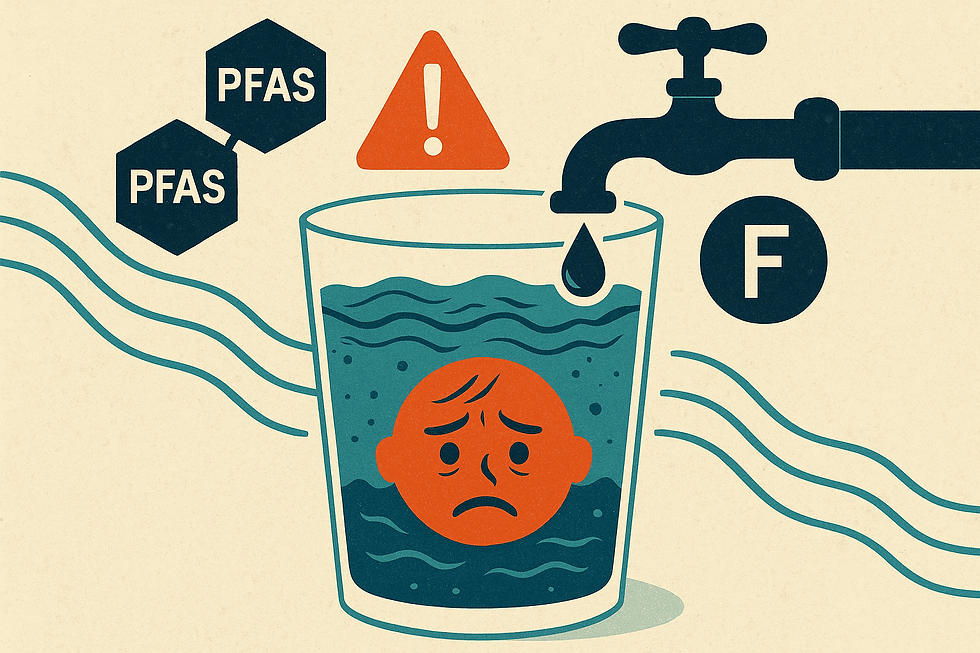
That Fountain Drink Might Be Dirtier Than You Think, PFAS, Bacteria & More

PFAS, Bacteria, & What’s Really Lurking Inside Soda Machines
Fountain drinks are everywhere: fast food counters, gas stations, movie theaters, and office cafeterias. They’re cheap, fast, and feel harmless. Press a button, get a fizzy reward. But behind the scenes, soda fountain machines have a bit of a reputation. And it’s not great.
Over the years, researchers have repeatedly found that fountain drink dispensers can harbor bacteria, sometimes at levels that raise legitimate hygiene concerns. At the same time, scientists and regulators are sounding the alarm about PFAS, so-called “forever chemicals”, in water systems that feed these machines.
So what’s actually in your cup? And should you be worried? Let’s break it down.
First, a Quick PFAS Refresher (because yes, they’re everywhere)
PFAS, short for per- and polyfluoroalkyl substances, are a massive group of human-made chemicals designed to be extremely durable. They repel water, oil, grease, and heat, which is why they’ve been used in everything from non-stick pans to waterproof jackets to food packaging. That durability is also the problem.
PFAS don’t break down easily. They build up in the environment and in our bodies over time, which is why scientists often call them “forever chemicals.” Research has linked PFAS exposure to:
Immune system suppression
Hormonal & metabolic disruption
Elevated cholesterol
Liver damage
Developmental issues in children
Increased risk of certain cancers
Drinking water is one of the most common ways people are exposed, especially in areas near industrial sites, military bases, or older infrastructure.
So… Can PFAS Show Up in Fountain Drinks?
There’s no viral study titled “Your Coke Is Full of PFAS” yet. But experts say there are very real pathways for PFAS to end up in fountain beverages.
1. The Water Supply
If the water feeding a soda machine contains PFAS, and many municipal systems do, those chemicals can carry straight into the drink unless advanced filtration is in place.
2. Older Machine Components
Some older beverage system parts (think tubing, seals, coatings) were historically made using PFAS-related materials. While many manufacturers have moved away from them, legacy equipment is still out there, especially in older restaurants and convenience stores.
3. The Supply Chain
PFAS contamination has been detected in food processing environments and packaging. That means contamination can happen long before the syrup ever hits the machine. The FDA is actively studying PFAS in food and beverages, but the science is still evolving, and regulation is playing catch-up.
The Bigger, Messier Issue: Bacteria in Soda Machines
If PFAS are the slow-burn concern, bacteria are the immediate red flag.
Unlike PFAS, microbial contamination in fountain drink machines is well-documented. Multiple studies have found that soda fountains, especially poorly maintained ones, often contain bacteria you probably don’t want in your drink.
What researchers keep finding
Coliform bacteria, which signal sanitation problems
DNA from organisms like E. coli, Salmonella, Pseudomonas, Klebsiella, & Staphylococcus
Yeasts and molds that thrive in sugary, moist environments
A widely cited study from Loma Linda University found that more than 40% of soda fountain water samples tested positive for coliform bacteria.
Not exactly refreshing.
Why Soda Fountains Are Basically a Bacteria Playground
Fountain drink machines are kind of the worst of all worlds when it comes to hygiene:
Sugar residue feeds microbes
Moist, dark interiors encourage growth
Water often sits stagnant overnight
Internal tubing is rarely cleaned as often as it should be
Biofilms (aka slimy bacterial communities) form & cling to surfaces
Even if the nozzle looks clean, bacteria can be thriving deeper inside the system, completely out of sight.
What Does This Mean for Your Health?
The Bacterial Angle
For most healthy adults, drinking from a contaminated fountain once in a while probably won’t cause noticeable harm. But for kids, older adults, pregnant people, or anyone with a weakened immune system, exposure increases the risk of gastrointestinal illness. Coliform bacteria themselves aren’t always dangerous, but they’re a strong indicator that cleaning standards have slipped.
The PFAS Angle
PFAS exposure isn’t about getting sick tomorrow. It’s about long-term accumulation. Fountain drinks aren’t likely to be your biggest PFAS source, but if you’re drinking them regularly, they may contribute to your overall exposure.
And with PFAS, the dose adds up.
How to Lower Your Risk (without spiraling)
If you run or manage a food service business:
Fully disassemble & sanitize nozzles & valves on a regular schedule
Clean internal lines, not just visible surfaces
Flush machines after downtime
Replace filters when you’re supposed to (not when it’s convenient)
Test source water in PFAS-affected areas
Consider advanced filtration like activated carbon or reverse osmosis
If you’re just trying to get a drink:
Avoid machines with visible grime, mold, or sticky buildup
Let the drink run briefly before filling your cup
Choose busy locations, high turnover usually means more frequent cleaning
When in doubt, grab a canned or bottled drink
Reduce overall PFAS exposure by using filtered water at home
No panic required. Just awareness.
Where This is Headed
The EPA has rolled out stricter PFAS limits for drinking water
The FDA continues testing foods & beverages for chemical contamination
Public health experts are calling for better sanitation oversight of beverage dispensers
Research on biofilms in food service equipment is ongoing
Translation: soda fountains aren’t going unexamined anymore.
The Takeaway
Fountain drinks aren’t automatically gross, but they’re also not as clean as we like to believe. Bacterial contamination is a known issue when maintenance falls short, and PFAS remain a broader environmental concern that can travel through water systems and equipment.
The solution isn’t quitting soda forever. It’s better standards, better filtration, and better information. Once you know what’s going on behind that button, you can make smarter choices, no fear required.
Sources
U.S. Food & Drug Administration (FDA) – PFAS in Food https://www.fda.gov/food/process-contaminants-food/questions-and-answers-pfas-food
U.S. Environmental Protection Agency (EPA) – PFAS Overview https://www.epa.gov/pfas
Loma Linda University Health – Soda Fountain Contamination Study https://news.llu.edu/research/researchers-find-contaminated-water-fast-food-soda-fountains
PubMed – Microbial Quality of Soda Fountain Beverages https://pubmed.ncbi.nlm.nih.gov/19926155/
PubMed – Bacterial Regrowth in Beverage Dispensers https://pubmed.ncbi.nlm.nih.gov/23562835/
National Institute of Environmental Health Sciences (NIEHS) – PFAS Health Effects https://www.niehs.nih.gov/research/programs/pfas
Centers for Disease Control and Prevention (CDC) – Coliform Bacteria in Water https://www.cdc.gov/mmwr/preview/mmwrhtml/00000504.htm