



How to Choose a Water Filtration System for Municipal Use In the U.S.?
Choosing a water filtration system for a municipal water treatment application requires balancing water quality goals, regulatory compliance, operating costs, and long-term reliability.
Unlike industrial systems, municipal systems must consistently meet federal and state drinking water standards while serving large populations.


Step 1: Understand Your Source Water
The source water drives the treatment process design.
Surface Water (Rivers, Lakes, Reservoirs)
Common contaminants:
-
Turbidity
-
Suspended solids
-
Algae
-
Natural organic matter (NOM)
-
Bacteria & viruses
-
Seasonal water quality fluctuations
Typical treatment train:
-
Intake screening
-
Coagulation/flocculation
-
Clarification
-
Media filtration
-
Disinfection
Groundwater (Wells)
Common contaminants:
-
Sand & sediment
-
Iron & manganese
-
Hardness
-
Arsenic
-
Nitrates
-
Radionuclides (in some regions)
Typical treatment train:
-
Sand separation
-
Filtration
-
Specialty treatment (if required)
-
Disinfection
Step 2: Determine Regulatory Requirements
Municipal drinking water systems must comply with regulations established by the U.S. Environmental Protection Agency under the Safe Drinking Water Act.
Key requirements may include:
-
Turbidity limits
-
Total coliform requirements
-
Disinfection byproduct limits
-
Arsenic standards
-
Lead and copper regulations
-
PFAS treatment requirements (where applicable)
Designing around regulatory compliance is often the first priority.

Step 3: Define Treatment Objectives
Objective
Common Technology
-
Turbidity »
-
Algae removal »
-
Iron & manganese removal »
-
Taset & odor control »
-
PFAS reduction »
-
Organic removal »
-
Pathogen control »
-
Nitrate removal »
-
Arsenic removal »
-
Clarification + media filtration
-
Oxidation + filtration
-
Granular activated carbon (GAC)
-
GAC or ion exchange
-
Enhanced coagulation + GAC
-
UV and/or chemical disinfection
-
Ion exchange or RO
-
Adsorptive media or coagulation
Step 4: Select the Appropriate Filtration Technology
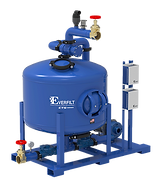
Multi-Media Filters
Best for:
-
Turbidity reduction
-
Surface water treatment
-
Pretreatment ahead of membranes
Advantages:
-
Proven municipal technology
-
High solids loading capacity
-
Reliable operation
-
Lower operating costs
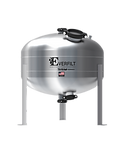
Granular Activated Carbon (GAC)
Best for:
-
PFAS treatment
-
Taste & odor removal
-
Organic contaminant reduction
Advantages:
-
Widely accepted by regulators
-
Effective for many emerging contaminants
-
Improves finished water quality
DMI-65® Filtration
Best for:
-
Iron & manganese removal
-
Arsenic removal
-
Heavy metals & hydrogen sulfide
Advantages:
-
No potassium permanganate
-
High flow rate capability
-
Continuous operation & self-regenerating
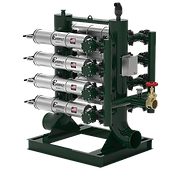
Wedge Wire Screen Filtration
Best for:
-
Sprinkler irrigation
-
Pivot irrigation
-
Final polishing for drip systems
Advantages:
-
Simple operation
-
Low maintenance
-
Precise filtration ratings
-
Lower initial cost
Step 5: Size of Current & Future Demand
Municipal systems are generally designed based on:
-
Average daily demand (ADD)
-
Maximum daily demand (MDD)
-
Peak hourly demand (PHD)
-
Fire flow requirements
-
Future population growth
Many municipalities design for 20 – 30 years of anticipated growth.
Step 6: Consider Lifecycle Costs
Evaluate:
-
Capital costs
-
Energy consumption
-
Media replacement
-
Chemical consumption
-
Backwash water usage
-
Operator requirements
-
Spare parts availability
The lowest initial cost rarely produces the lowest long-term operating cost.

Step 7: Automation & Monitoring
Modern municipal systems typically include:
-
PLC controls
-
SCADA integration
-
Remote monitoring
-
Automatic backwash controls
-
Water quality monitoring
-
Regulatory reporting capability
These features improve reliability and simplify compliance.
Typical Municipal Treatment Configurations
Conventional Surface Water Plant:
-
Screening
-
Coagulation
-
Flocculation
-
Clarification
-
Multi-media filtration
-
Disinfection
-
Distribution
Groundwater Treatment Plant:
-
Sand separation
-
Oxidation (if required)
-
Media filtration
-
GAC (if required)
-
Disinfection
-
Distribution
PFAS Treatment Upgrade:
-
Existing filtration
-
GAC adsorption or ion exchange
-
Monitoring
-
Distribution
Membrane-Based Plant:
-
Pretreatment
-
Ultrafiltration
-
Optional RO
-
Disinfection
-
Distribution
Key Questions Before Selecting Equipment:
-
What is the source water?
-
What is the design flow rate (MGD or GPM)?
-
What contaminants must be removed?
-
Are PFAS, arsenic, iron, manganese, or nitrates present?
-
Is the system new construction or a retrofit?
-
What state regulatory requirements apply?
-
What level of automation is desired?
For many municipal projects in the U.S., multi-media filtration remains the most common filtration technology due to its proven performance, relatively low operating cost, and ability to integrate with clarification, GAC, and disinfection systems. For communities facing PFAS concerns or stricter pathogen requirements, GAC and membrane systems are increasingly being incorporated into new treatment plant designs.